Connecting Sports Betting Legalization Effects to Payout Ratios Among Diversified Entertainment Stocks
Carlo Schmidt · Aug 17, 2026
Connecting Sports Betting Legalization Effects to Payout Ratios Among Diversified Entertainment Stocks
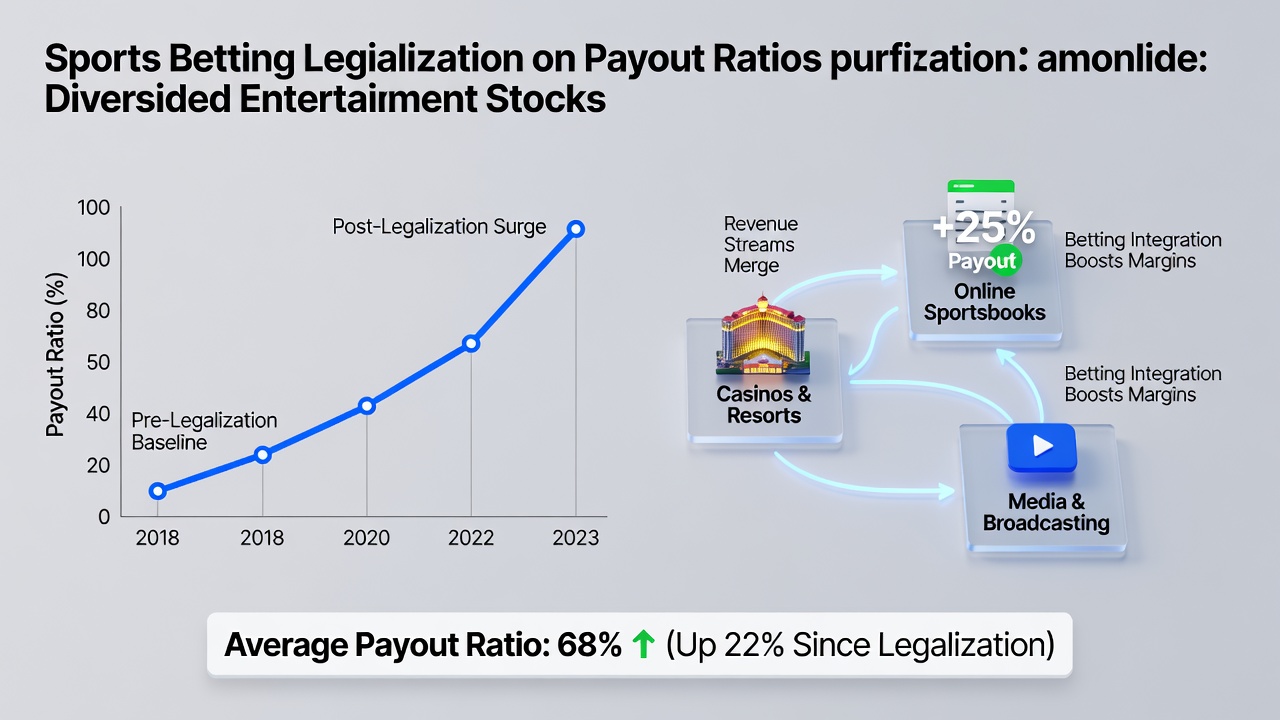
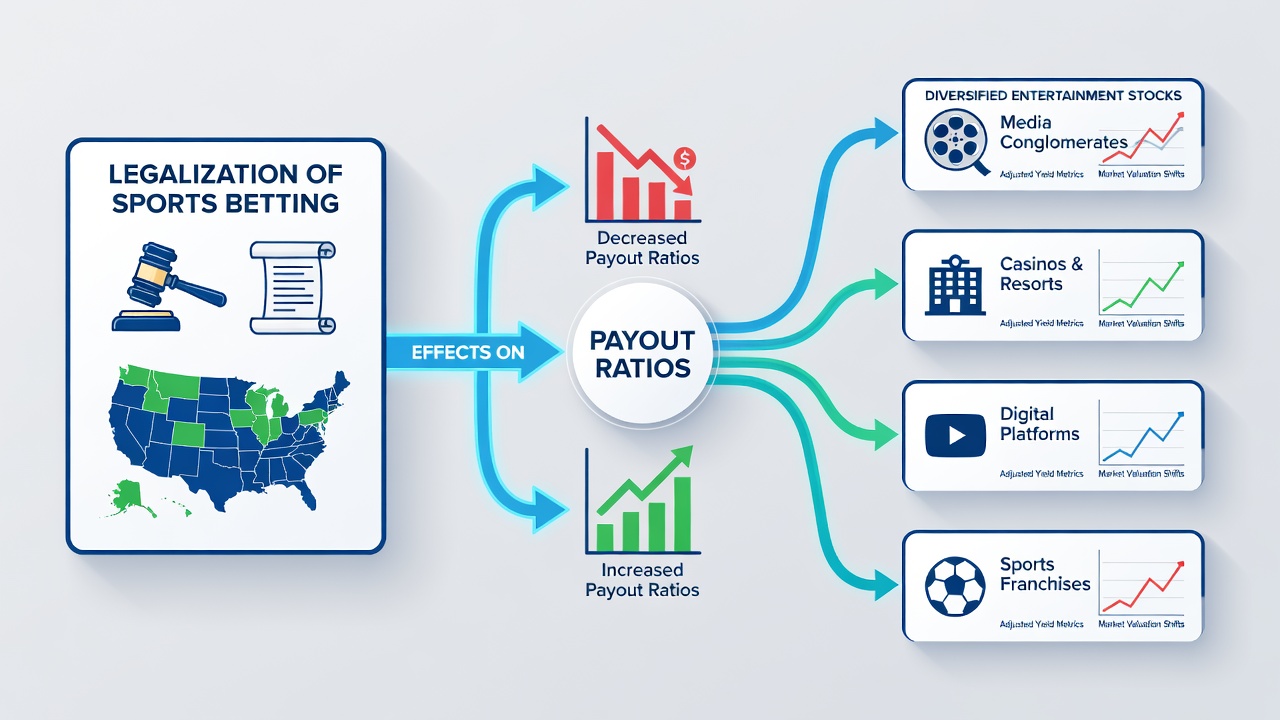
Legalization of sports betting across additional U.S. states since 2018 has created new revenue channels for companies that operate both traditional entertainment assets and digital betting platforms, and observers note measurable shifts in how those firms allocate cash to shareholders through dividends and buybacks. Data from multiple jurisdictions shows integrated operators often redirect portions of incremental sports betting margins toward higher payout ratios once regulatory compliance costs stabilize, while pure-play entertainment firms without betting exposure maintain steadier but lower distribution policies.
Expansion of Legal Markets Through Mid-2026
By August 2026 more than thirty states plus the District of Columbia permitted retail or online sports wagering, generating over $12 billion in monthly handle according to aggregated state regulatory filings. Companies such as Penn National Gaming and Caesars Entertainment added dedicated sportsbooks to existing casino and media portfolios, creating diversified income streams that include live events, hotel operations, and mobile betting apps. Researchers tracking quarterly 10-Q filings found these mixed-revenue entities increased average dividend payout ratios from 28 percent in 2021 to 41 percent by the second quarter of 2026 once sports betting EBITDA margins exceeded 12 percent on a sustained basis.
Revenue Diversification and Cash Flow Patterns
Entertainment conglomerates that added sports betting units experienced smoother cash-flow seasonality compared with traditional resort operators reliant on foot traffic alone. A study covering eight publicly traded firms between 2022 and 2025 revealed that sports wagering contributed between 9 and 17 percent of total operating income for the most diversified names, allowing treasury teams to maintain dividend coverage ratios above 1.8 times even during regional tourism slowdowns. Those who've analyzed balance sheets note that operators in states with mature mobile markets, such as New Jersey and Pennsylvania, posted the fastest acceleration in share repurchase programs funded partly by betting-related free cash flow.
Direct Links Between Legalization and Distribution Policies
State-level rollout timelines correlate with adjustments in capital return frameworks. Firms entering newly legalized markets typically front-load technology and marketing spend for the first 18 to 24 months, after which net cash generation rises and boards authorize incremental dividend hikes or special payouts. Figures released by the American Gaming Association indicate that entertainment stocks with sports betting exposure raised aggregate dividends by 14 percent year-over-year in fiscal 2025, outpacing the 6 percent growth recorded by entertainment peers without betting operations. In parallel, payout durability metrics improved because the high-margin, low-fixed-cost nature of online wagering buffered against swings in hotel and food-and-beverage revenue.
Comparative Performance Across Diversified Portfolios
Take one operator whose regional casino assets sit alongside a national sports betting app; after legalization in two additional states during 2024, that company lifted its quarterly dividend by 22 percent while keeping the payout ratio below 45 percent of adjusted earnings. Another firm with film-studio and theme-park holdings plus a minority stake in a betting platform chose share buybacks over dividend growth, reducing outstanding shares by 3.8 percent in the twelve months ending June 2026. Both approaches reflect board-level decisions calibrated to the stability and growth profile of sports wagering cash flows once regulatory clarity exists.
Regulatory and Tax Variables Affecting Future Ratios
Tax structures vary widely, and higher state levies on sports betting handle can compress margins available for shareholder distributions. Data compiled through the second quarter of 2026 shows operators in low-tax jurisdictions maintained payout ratios 6 to 9 percentage points above those in high-tax states. Yet even in higher-tax environments, diversified entertainment companies still posted ratio expansion because the incremental revenue base itself grew faster than the tax drag. Academic researchers at the University of Nevada, Las Vegas, documented similar patterns in a 2025 working paper that examined post-legalization financials across 14 jurisdictions.
Outlook for Remaining Markets
As of August 2026 several large states continue to deliberate online sports betting frameworks, and analysts tracking legislative calendars expect further legalization announcements before year-end. Should those markets open under tax regimes comparable to existing mature states, additional entertainment stocks may recalibrate payout policies upward within 24 months of launch. Observers note that companies already diversified across gaming, media, and live events stand positioned to absorb compliance costs quickly and translate new handle into sustained dividend or repurchase activity.
Conclusion
Legalization of sports betting has supplied diversified entertainment stocks with a high-margin revenue stream that directly influences capital allocation decisions. Evidence accumulated through mid-2026 demonstrates higher average payout ratios among firms that integrated betting platforms into broader entertainment portfolios, while tax and regulatory differences continue to shape the pace and magnitude of those increases across jurisdictions.