Currency Exchange Rate Swings and Their Effects on Profit Allocation Timetables for International Resort Groups
Quinn Washington · Jun 24, 2026
Currency Exchange Rate Swings and Their Effects on Profit Allocation Timetables for International Resort Groups
International resort groups operate properties across multiple countries where revenues arrive in local currencies while many costs and shareholder expectations tie to parent company reporting currencies. Exchange rate movements therefore shift the timing and size of funds available for dividends, reinvestments, and debt service. Operators in the integrated resort sector have developed allocation calendars that now incorporate forward-looking currency models rather than fixed quarterly schedules.How Rate Volatility Alters Revenue Conversion Cycles
Resort groups headquartered in the United States or Europe often book revenues from Asian or Latin American properties in local units before converting to the reporting currency. A sudden strengthening of the US dollar against the Philippine peso or the Macanese pataca reduces the home-currency value of those earnings even when underlying business volumes remain steady. Finance teams respond by adjusting the precise week when they authorize repatriation transfers so that converted amounts align with planned distribution dates.
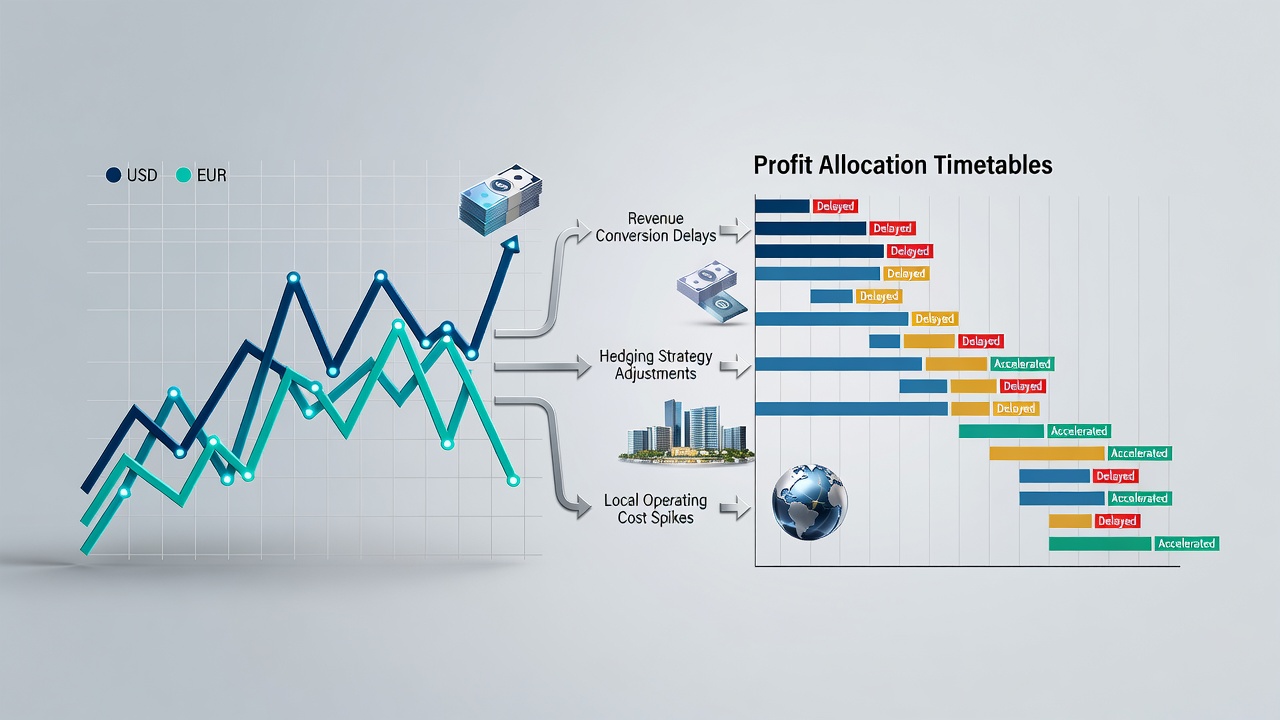
Data compiled by the Monetary Authority of Singapore shows that during periods of elevated volatility in the first half of 2026, several operators deferred repatriation of Singapore dollar earnings by two to three weeks to avoid locking in unfavorable rates. Those delays pushed certain dividend declaration meetings from late May into early July, illustrating how currency conditions directly modify profit allocation timetables.
Regional Examples of Timetable Adjustments
Resort operators with holdings in both Australia and Japan provide a clear illustration. When the Australian dollar weakened against the yen in spring 2026, groups that normally move funds monthly began batching transfers on a six-week cycle to capture more favorable cross rates. The shift meant that capital expenditure reserves earmarked for Australian property upgrades arrived later than originally projected, forcing project timelines to slip by one quarter.
European resort groups face similar dynamics with Eastern European and Turkish properties. The European Central Bank’s 2026 currency stability report documented that lira volatility prompted several operators to move profit extraction windows from calendar quarters to rolling 45-day periods. This change allowed treasury departments to monitor rate trends more closely before committing funds to parent-level dividend pools.
Hedging Instruments and Their Influence on Allocation Dates
Forward contracts and currency options now sit at the center of allocation planning. When resort groups purchase multi-month hedges, they gain visibility into minimum conversion rates and can set firmer dates for shareholder distributions. Yet those same instruments require collateral posting on specific settlement dates, which can pull cash forward and compress the interval between earnings recognition and payout approval.

Observers note that one major Southeast Asian resort operator advanced its June 2026 interim dividend announcement by ten days after securing favorable forward rates on Malaysian ringgit inflows. The earlier date freed balance-sheet capacity for a planned share repurchase program scheduled later that same month.
Regulatory and Tax Considerations in Timing Decisions
Tax authorities in several jurisdictions impose deadlines on profit remittance that interact with currency movements. When exchange rates move sharply, companies sometimes accelerate or postpone repatriation within allowed windows to optimize after-tax yields. Canadian and Australian gaming tax rules, for instance, permit quarterly filings that give operators flexibility to choose the most advantageous conversion month within each quarter.
Research from the University of Nevada’s Center for Gaming Research indicates that resort groups with properties in multiple tax regimes have lengthened their internal review periods for profit allocation from four weeks to six weeks during high-volatility episodes. The added review time accommodates scenario modeling of rate paths before final distribution approvals.
Conclusion
Currency exchange rate swings continue to reshape teh calendars that international resort groups use for profit allocation. By embedding forward rate analysis into treasury workflows, operators adjust repatriation timing, hedge settlement dates, and dividend declaration windows in response to market conditions. These adaptations keep distributions aligned with available converted cash while satisfying regulatory and shareholder expectations across borders.