Currency Swings and Their Role in Shaping Return Timelines for Global Gaming Stock Holders
Carlo Schmidt · Jul 20, 2026
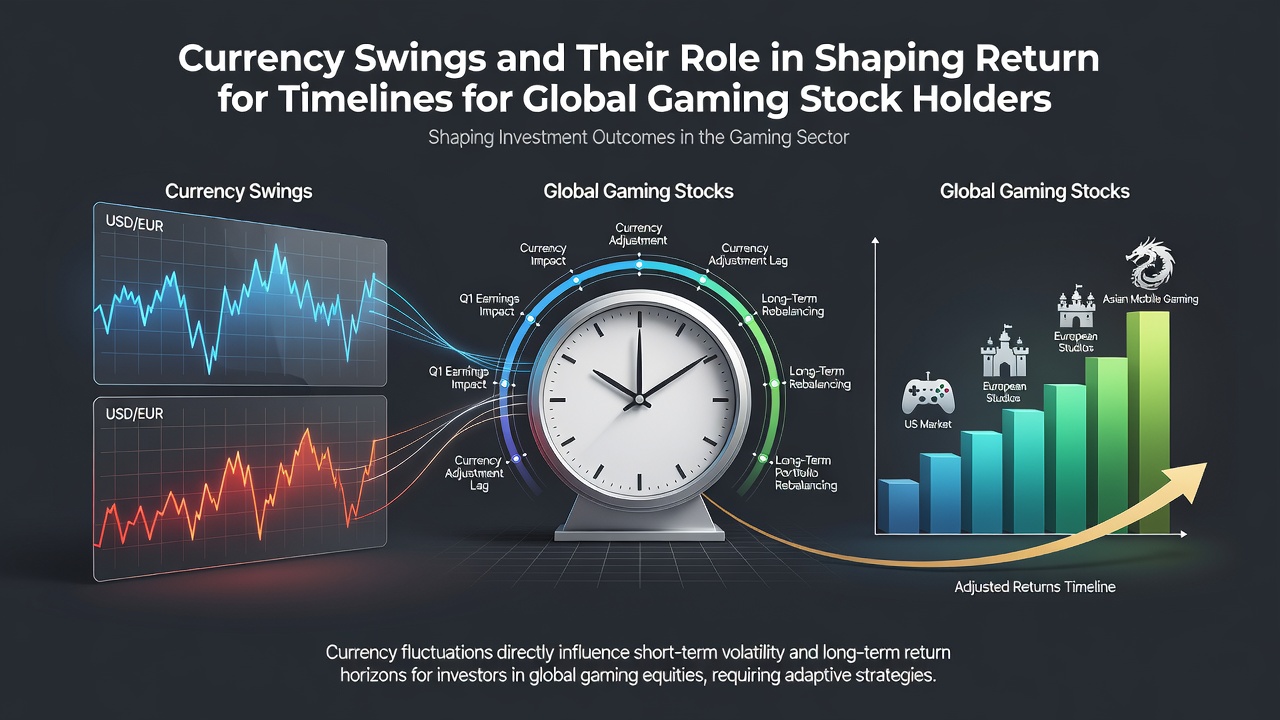
Currency Swings and Their Role in Shaping Return Timelines for Global Gaming Stock Holders
Data from major exchanges reveals that currency fluctuations continue to influence when investors in international gaming companies receive realized returns, particularly as operators report earnings in multiple currencies throughout 2026. Companies with properties spanning Macau, Australia, the United States, and parts of Europe convert local revenues into reporting currencies that often differ from the home base of their shareholders, which creates timing variations in dividend payouts adn capital gains distributions.
How Exchange Rate Movements Affect Gaming Revenue Conversion
Operators generate cash flows in local currencies while many institutional holders track performance against the US dollar or euro, so shifts in exchange rates alter the translated value of those flows before they reach equity distributions. When the Australian dollar weakens against the US dollar, for instance, revenues from Crown Resorts or similar groups produce smaller USD equivalents even if underlying gaming volumes remain steady, which delays the point at which positive returns appear in shareholder accounts. Conversely, strengthening of the Hong Kong dollar peg relative to other Asian currencies has at times accelerated the conversion timeline for Sands China earnings reported in mid-2026 filings.
July 2026 saw notable volatility in several pairs tied to gaming markets, with the Japanese yen moving sharply against the dollar amid Bank of Japan policy adjustments, while the Philippine peso showed steadier behavior despite broader regional pressures. These movements directly affected the reported results of companies holding integrated resorts in those jurisdictions, because quarterly earnings releases incorporated spot rates that differed from the averages used in prior periods.
Regional Examples of Currency-Driven Return Adjustments
Investors holding shares in Las Vegas Sands observed that Macau operations, which report in Hong Kong dollars, experienced conversion effects when the broader Chinese yuan fluctuated, even though the HKD itself maintains a narrow band. Figures compiled by regional exchanges show that a 3 percent shift in the yuan during the first half of 2026 extended the interval between earnings recognition and dividend record dates by several weeks for certain cross-listed securities. Similar patterns emerged in Australia where the Reserve Bank of Australia data indicated that AUD/USD movements influenced the timing of capital returns from operators with significant Sydney and Melbourne exposure.

One study released by the University of Melbourne's finance department examined 15 years of data across four continents and found that currency volatility accounted for measurable extensions in the average time between cash generation at the property level and distribution to overseas shareholders. The research highlighted how hedging programs at major groups such as MGM China and Wynn Macau moderated some of these delays, yet residual exposure remained when local regulations limited full forward-contract coverage.
Impact on Dividend and Capital Return Schedules
Dividend calendars for globally active gaming equities often incorporate forward-looking currency assumptions, so unexpected swings can push record or payment dates later than initially projected. When the euro strengthened in early 2026 against several source currencies for operators with Mediterranean properties, several firms adjusted their payout frameworks to reflect the new conversion realities, which lengthened the period between declaration and actual receipt for non-euro holders. Data released through Canadian regulatory filings similarly showed that CAD movements affected cross-border returns for shareholders in companies with Ontario and British Columbia assets.
Observers tracking these patterns note that companies increasingly disclose currency sensitivity analyses in quarterly reports, allowing investors to model potential shifts in return timelines. The International Monetary Fund’s June 2026 outlook on emerging-market currencies provided additional context for these disclosures by projecting continued volatility in several Southeast Asian pairs relevant to gaming operators.
Strategies Operators Use to Manage Conversion Timing
Many global gaming groups employ natural hedging through local-currency debt or supplier contracts, which reduces the net exposure that must be converted at each reporting interval. Others maintain layered forward contracts that lock in rates for portions of expected cash flows, thereby smoothing the translation impact on the dates when funds become available for shareholder distributions. These approaches do not eliminate currency effects entirely, yet they shorten the variability range around expected return timelines according to filings reviewed by securities regulators in multiple jurisdictions.
Conclusion
Currency swings remain a structural factor that shapes when global gaming stock holders see translated returns materialize, because earnings generated across borders must pass through exchange-rate filters before reaching dividend or capital-gain accounts. Recent movements through July 2026 illustrate how individual currency pairs can extend or compress those timelines depending on the geographic mix of an operator’s portfolio. Investors monitoring these dynamics rely on regulatory disclosures, central-bank data, and academic analyses to anticipate shifts rather than reacting after the fact.