Sweepstakes Casino Operators Confront Market Contraction Through Strategic Brand Shifts in 2026
Amir Richter · May 30, 2026

Sweepstakes Casino Operators Confront Market Contraction Through Strategic Brand Shifts in 2026
State-level restrictions have triggered measurable contractions for US sweepstakes casino operators throughout 2026, with companies like Virtual Gaming Worlds responding through targeted exits, new brand launches, and operational adjustments. California's Assembly Bill 831 took effect on January 1, 2026, removing an estimated 20 percent of national revenue according to industry analyses, while Indiana's House Bill 1052 received approval in March 2026 with enforcement scheduled for July 1. These measures build on earlier 2025 departures from markets including New York and Maine, creating a cumulative effect that operators address through diversified product offerings and revised marketing approaches.
California's Revenue Impact and Immediate Adjustments
Assembly Bill 831's implementation in early 2026 forced operators to recalculate their market presence, since the legislation eliminated access to a substantial portion of prior revenue streams. Data from sector reports shows that companies previously reliant on California user bases initiated phased withdrawals, reallocating resources toward states with more stable regulatory environments. Virtual Gaming Worlds, the parent company of Chumba Casino, accelerated these shifts by streamlining its portfolio and preparing alternative platforms that comply with updated rules. Observers note that such moves occurred alongside broader litigation pressures, where operators contested certain provisions while simultaneously preparing contingency plans for sustained operations elsewhere.
Indiana Legislation and Pre-Enforcement Preparations
Indiana's House Bill 1052, signed into law in March 2026, introduced additional compliance requirements with full enforcement set for July 1 of that year. As of May 2026, multiple operators had begun preliminary compliance audits and user migration processes to minimize disruptions ahead of the deadline. Virtual Gaming Worlds executed exits from several restricted jurisdictions during this period, using the interval to test new product structures that separate sweepstakes elements from direct gaming features. These adjustments reflect patterns seen in prior state-level changes, where operators modified prize mechanisms and promotional frameworks to align with evolving statutes.
Brand Diversification and Marketing Realignments
Virtual Gaming Worlds expanded its offerings beyond established platforms by introducing LuckyLand Casino and Just Slots, brands designed to operate within narrower regulatory parameters. These launches coincided with revised marketing strategies that emphasized compliance messaging and targeted outreach in permitted regions. Industry data indicates that such diversification helped offset revenue losses from exited markets, as operators redirected advertising budgets toward digital channels less affected by state restrictions. Researchers tracking these developments found that companies employing multi-brand approaches maintained user engagement levels more effectively than those relying on single-platform models during similar transitions in 2025.
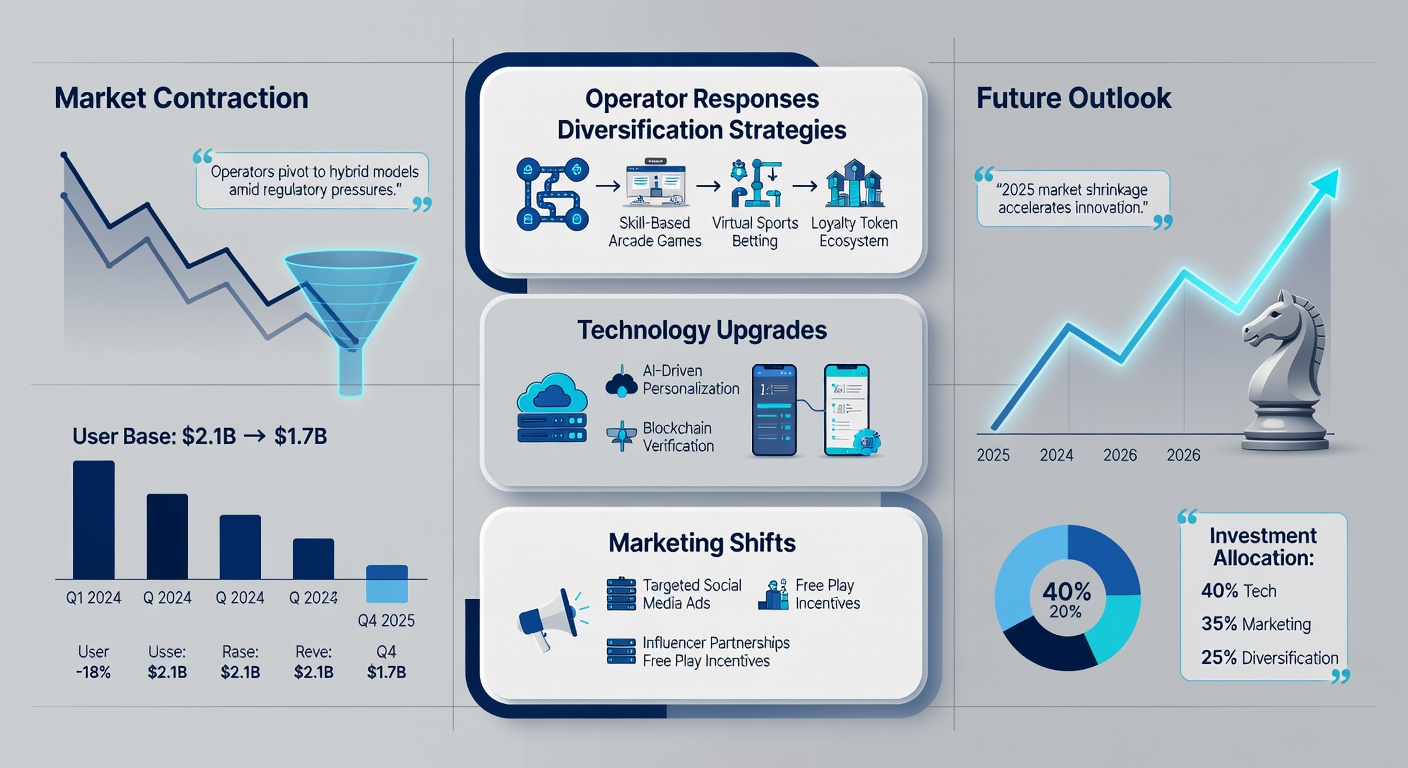
Product structure modifications formed another core response, with operators altering entry mechanisms and reward systems to reduce exposure to contested legal interpretations. According to reports from casino industry monitoring sources, these changes often involved enhanced verification protocols and segmented user experiences that differentiate between promotional and paid elements. Such adaptations occurred against a backdrop of ongoing litigation, where several operators challenged enforcement timelines while pursuing parallel strategies for market retention in unaffected areas.
Cumulative Effects from 2025 Exits and Broader Trends
Prior exits from New York, Maine, and additional states in 2025 established precedents that informed 2026 responses, as operators applied lessons from those transitions to current challenges. Figures compiled by gaming research groups reveal that cumulative revenue impacts exceeded initial projections, prompting accelerated timelines for brand rollouts and operational restructuring. Virtual Gaming Worlds coordinated these efforts across multiple jurisdictions simultaneously, leveraging centralized development teams to deploy compliant features more rapidly. Those who monitor sector activity observe that companies adopting proactive diversification maintained stronger positions compared to peers that delayed adjustments until enforcement dates approached.
Current Landscape as of Mid-2026
By May 2026, the combination of California's revenue reduction and Indiana's upcoming enforcement had prompted widespread portfolio reviews among sweepstakes operators. Virtual Gaming Worlds continued refining its new brands while monitoring litigation outcomes that could influence future market access. Evidence from trade publications suggests that marketing expenditures shifted toward retention-focused campaigns in remaining states, with emphasis on user education regarding updated terms. These patterns align with responses documented after earlier state restrictions, where operators balanced immediate compliance needs against longer-term growth objectives through measured expansion of alternative platforms.
Conclusion
The developments through mid-2026 illustrate how state-specific legislation drives operational changes across the sweepstakes casino sector, with major players like Virtual Gaming Worlds employing brand launches, market exits, and structural modifications to address revenue shifts. California's Assembly Bill 831 and Indiana's House Bill 1052 represent key milestones in this sequence, building on 2025 precedents and prompting coordinated responses that continue to evolve as enforcement dates near. Data from regulatory tracking sources and industry analyses provide the foundation for understanding these adjustments, highlighting the sector's adaptation mechanisms without reliance on any single market.