Tourist Arrival Data as Early Signals for Capital Return Adjustments Across Global Resort Portfolios
Kai Neumann · Aug 12, 2026
Tourist Arrival Data as Early Signals for Capital Return Adjustments Across Global Resort Portfolios
Analysts track tourist arrival figures as leading indicators that influence decisions on dividend distributions and share repurchases at integrated resort companies operating across multiple continents. Government agencies compile these numbers from immigration records, airline manifests, and hotel registrations, then release monthly summaries that portfolio managers review alongside occupancy rates and average daily room revenue. When arrivals rise steadily in key markets, operators often accelerate capital return programs because increased visitor volumes support higher gaming volumes and non-gaming spend that feed directly into free cash flow calculations.
Regional Patterns and Data Sources
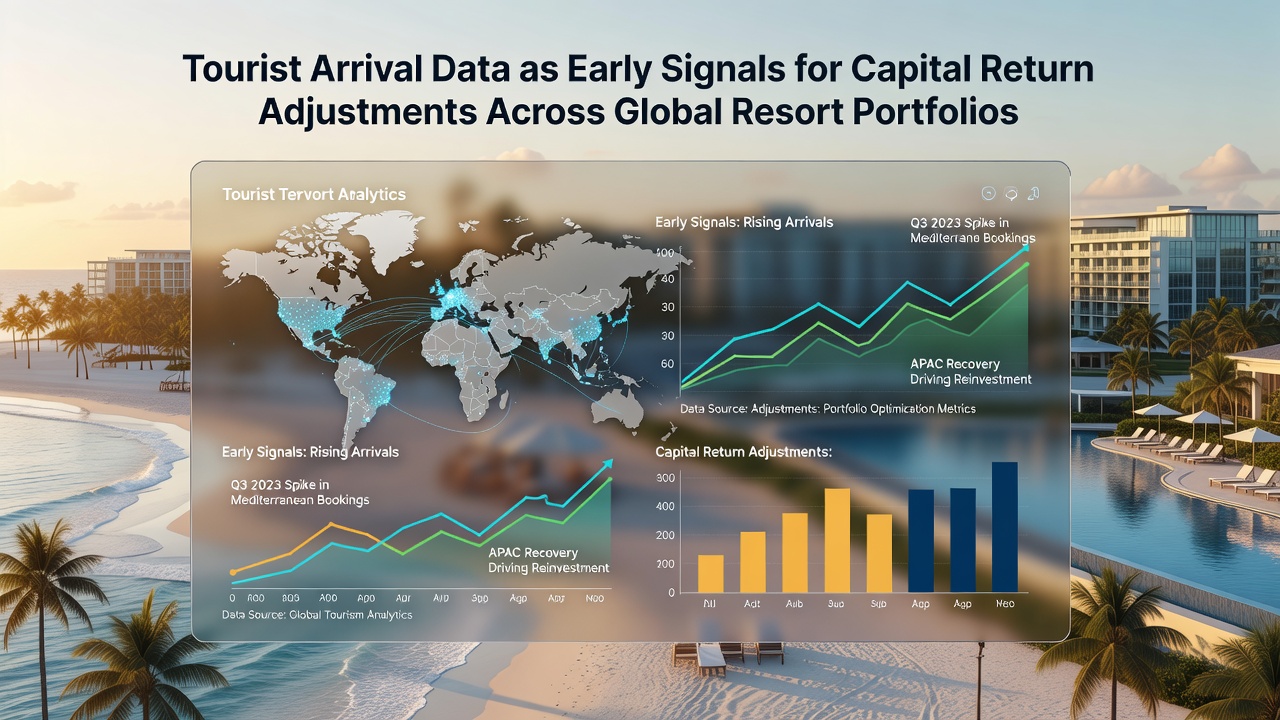
Figures released by the UN Tourism show that arrivals in the Asia-Pacific region grew 12 percent year-over-year through the first half of 2026, while European destinations posted a 7 percent gain over the same period. Portfolio teams at operators with properties in Macau, Singapore, and the Philippines adjust payout ratios after reviewing these regional breakdowns because each market contributes different margins to consolidated earnings. In August 2026, preliminary counts from several Southeast Asian gateways indicated continued momentum, prompting several groups to finalize quarterly distribution schedules earlier than usual.
North American resort portfolios rely on data from the U.S. National Travel and Tourism Office and Statistics Canada to gauge cross-border flows that affect properties in Las Vegas, Atlantic City, and Canadian border markets. When Canadian arrivals increase, U.S. operators note stronger table game hold percentages and higher hotel RevPAR, which in turn supports larger authorized repurchase programs approved by boards. Observers note that the correlation appears strongest when arrival growth exceeds 8 percent for three consecutive quarters, a threshold that historically preceded dividend increases at major resort REITs.
How Arrival Data Feeds Capital Allocation Models
Finance teams build regression models that treat monthly arrival counts as independent variables and quarterly free cash flow as the dependent variable. These models incorporate lagged effects because visitors booked months earlier translate into realized revenue only after they complete their stays. Once arrival forecasts exceed internal thresholds, management committees recommend adjustments to capital return policies that include special dividends or accelerated buybacks. Researchers at several university business schools have documented that companies incorporating real-time arrival feeds into their models reduced forecast errors by an average of 15 percent compared with those relying solely on historical internal metrics.

Portfolio managers also watch arrival composition by source market because high-roller segments from specific countries generate outsized gaming revenue. A surge in visitors from premium markets can shift the mix of EBITDA contribution, allowing operators to increase the percentage of earnings returned to shareholders without straining maintenance capital expenditure budgets. Data providers aggregate these breakdowns from visa statistics and flight booking platforms, delivering weekly updates that feed directly into treasury dashboards used by CFOs.
Case Examples from Major Operators
One integrated resort group with holdings in Australia and the United States revised its annual distribution guidance upward after Australian Bureau of Statistics data showed a 9 percent rise in international arrivals during the March quarter of 2026. The adjustment allowed the company to maintain its regular dividend while adding an incremental repurchase authorization that settled in the following quarter. Another operator in the Mediterranean basin used arrival data from the European Travel Commission to time a partial sell-down of non-core assets, freeing capital for a larger shareholder return program at its flagship properties.
Those who monitor global portfolios report that arrival volatility in emerging destinations such as Vietnam and Indonesia produces more pronounced swings in capital return timing. When growth stalls, operators defer buyback tranches and conserve cash for operational contingencies. Conversely, sustained acceleration often coincides with board approvals for higher payout ratios, particularly when the operator maintains low leverage relative to regional peers.
Conclusion
Tourist arrival statistics continue to serve as early inputs for capital return frameworks at resort operators worldwide because they correlate closely with subsequent revenue and cash generation cycles. Government agencies and industry associations release the underlying numbers on predictable schedules, giving portfolio managers time to recalibrate distribution policies ahead of earnings releases. As operators refine their models with higher-frequency data feeds, the lag between arrival signals and capital return announcements has shortened, allowing markets to anticipate changes in dividend and repurchase activity with greater precision.